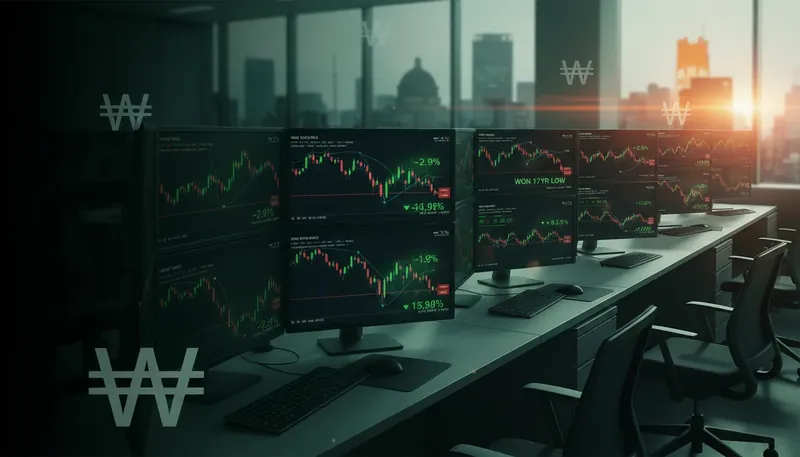
South Korean financial markets faced a sharp decline on Monday, with the KOSPI index plummeting nearly 3%. This downturn coincides with the South Korean won hitting a 17-year low against the US dollar, a development that has sent ripples through the global financial landscape. The primary catalyst for this market upheaval is the escalating conflict in the Middle East, which has heightened geopolitical risks and led investors to adopt a more cautious stance.
The KOSPI's decline is a reflection of broader concerns about the potential economic fallout from the Middle East tensions. As oil prices fluctuate and the possibility of further disruptions looms, global markets are bracing for potential volatility. South Korea, with its export-driven economy, is particularly vulnerable to such geopolitical shocks. The depreciation of the won further complicates the situation, as it increases the cost of imports, potentially leading to inflationary pressures.
For Indian investors, the developments in South Korea serve as a stark reminder of the interconnectedness of global markets. The Indian stock market, while resilient, is not immune to external shocks. Investors should keep a close watch on how these geopolitical tensions evolve, as they could influence commodity prices and, by extension, sectors like energy and manufacturing in India.
Moreover, the South Korean experience underscores the importance of currency risk management. With the won's depreciation, South Korean exporters may find their goods more competitively priced abroad, but the increased cost of imports could squeeze profit margins. Indian businesses with exposure to international markets should consider strategies to hedge against currency volatility.
In conclusion, while South Korean markets grapple with the immediate impact of Middle East tensions, the ripple effects are likely to be felt globally. Indian investors should remain vigilant, as the evolving geopolitical landscape could present both risks and opportunities.