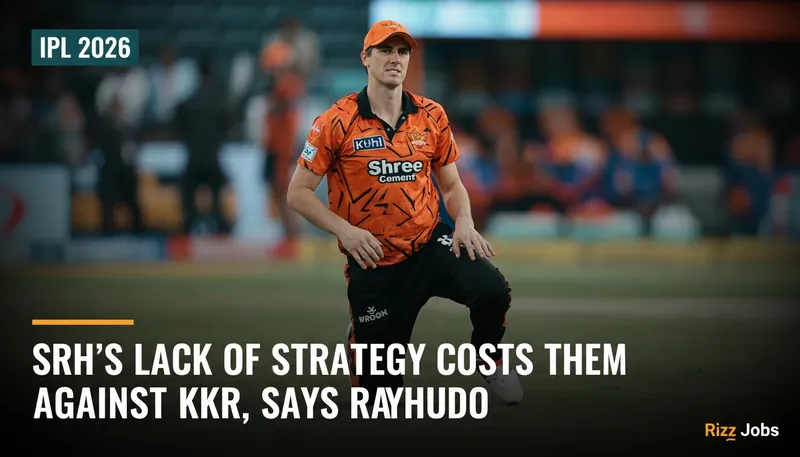
In a recent Indian Premier League (IPL) face-off, Sunrisers Hyderabad (SRH) faced a disappointing defeat against Kolkata Knight Riders (KKR), a match that highlighted the critical need for strategic planning. Ambati Rayudu, a seasoned IPL player, criticized SRH's approach, suggesting that they underestimated the importance of meticulous preparation. The loss has sparked discussions about the team's management and their tactical decisions, which seemed to lack depth against a well-prepared KKR side.
The match, which was anticipated to be a thrilling encounter, ended with SRH struggling to keep up with KKR's aggressive gameplay. Katey Martin, a cricket analyst, pointed out that SRH's performance could serve as a wake-up call, urging them to reassess their strategies and regain momentum in the tournament. The defeat not only affects SRH's standing in the league but also raises questions about their ability to compete at a high level without adequate planning.
For investors and stakeholders in the IPL ecosystem, such performances can influence team valuations and sponsorship deals. A team's success on the field often translates into financial gains off the field, attracting better sponsorships and increasing merchandise sales. Therefore, SRH's management might need to consider these factors seriously if they wish to maintain their market value and appeal to investors.
As the IPL progresses, all eyes will be on how SRH adapts and evolves their strategies. The league is not just a sporting event but a significant business venture, where performance directly impacts financial outcomes. Teams that fail to innovate and strategize effectively risk not only their position in the league but also their financial stability in a competitive market.