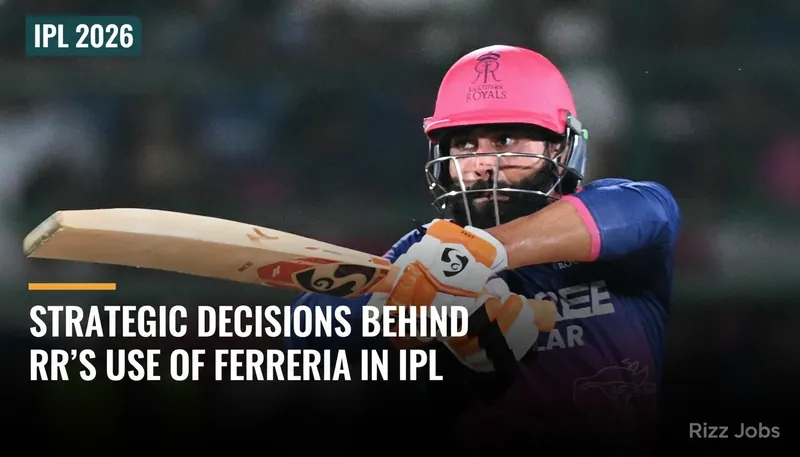
In a recent Indian Premier League (IPL) match, Rajasthan Royals (RR) captain Riyan Parag made a strategic decision that has caught the attention of cricket enthusiasts and analysts alike. The decision to hold back the in-form batter Ferreira, despite his recent explosive performances, was not merely a tactical move but a calculated strategy aimed at maintaining a left-right batting combination. This decision underscores the importance of strategic planning in cricket, where team dynamics and opposition analysis play crucial roles.
Parag explained that the choice was influenced by the need to disrupt the bowling plans of the opposition, a strategy that has been increasingly employed in modern cricket. By alternating between left and right-handed batsmen, RR aimed to unsettle the bowlers, forcing them to constantly adjust their line and length. This approach, while not new, highlights the evolving nature of cricket strategies where traditional roles are being redefined to gain competitive advantages.
For investors and stakeholders in the IPL ecosystem, such strategic decisions are a reminder of the intricate planning and analysis that go into the sport. The IPL is not just a cricket tournament; it is a multi-billion-dollar industry where team performance directly impacts franchise valuations, sponsorship deals, and merchandise sales. Strategic decisions on the field can influence a team's marketability and financial success off the field.
As the IPL continues to grow in stature and financial significance, understanding the nuances of on-field strategies becomes essential for investors looking to capitalize on the league's commercial opportunities. The decision by RR to hold Ferreira back is a testament to the depth of analysis and foresight required to succeed in the IPL, both on and off the field.