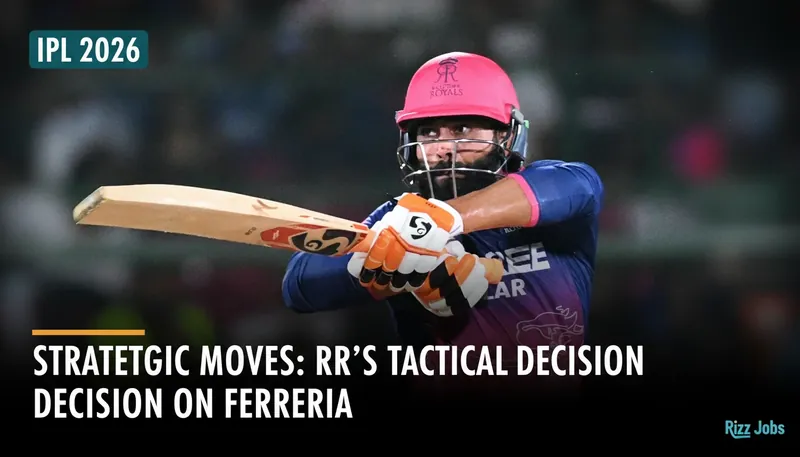
In a recent Indian Premier League (IPL) match, Rajasthan Royals (RR) captain Riyan Parag made a strategic decision to hold back the in-form batter Ferreira, despite his impressive run-scoring spree. This decision, as explained by Parag, was driven by the team's desire to maintain a left-right batting combination, which is often seen as a tactical advantage in cricket. The left-right combination can disrupt the bowler's rhythm, forcing constant adjustments in line and length, and potentially leading to more scoring opportunities.
Parag's decision highlights the intricate strategies employed by IPL teams to gain a competitive edge. While Ferreira's exclusion from the immediate batting order might have raised eyebrows among fans and analysts, it underscores the importance of strategic planning in high-stakes matches. The IPL, known for its intense competition and high viewership, often sees teams making unconventional decisions to outmaneuver opponents.
For investors and businesses involved in the IPL ecosystem, such strategic decisions are crucial as they can influence team performance, fan engagement, and ultimately, the financial outcomes of the tournament. The IPL's commercial success is heavily dependent on team performances, which drive ticket sales, merchandise, and broadcasting rights. Therefore, understanding the tactical aspects of the game can provide insights into the league's financial dynamics.
As the IPL continues to grow in stature, the business implications of on-field decisions become increasingly significant. Teams like RR, which are willing to innovate and adapt, may not only enhance their chances of winning but also boost their marketability and brand value. This, in turn, can attract more sponsorships and partnerships, further solidifying the IPL's position as a lucrative venture in the sports industry.