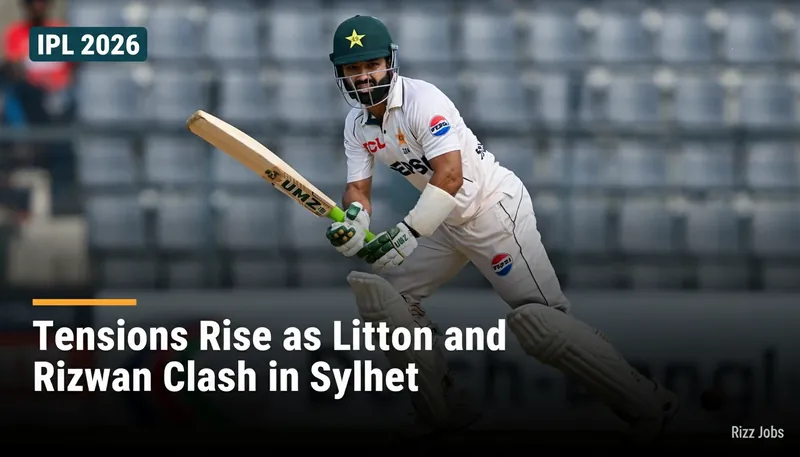
In a heated encounter on the cricket field in Sylhet, Bangladesh's fielders engaged in a spirited exchange with Pakistan's batter Mohammad Rizwan during the fourth day of play. This incident has added a layer of intensity to the ongoing series, capturing the attention of cricket enthusiasts across the Indian subcontinent. The tension between Litton Das and Rizwan is not just a reflection of the competitive spirit inherent in international cricket but also underscores the high stakes involved in such matches. As the game unfolded, Rizwan, known for his composure under pressure, found himself at the center of a verbal spat with the Bangladeshi fielders, led by Litton Das. This altercation has sparked discussions about sportsmanship and the psychological aspects of cricket, where mental resilience can often be as crucial as physical prowess.
For investors and businesses with interests in the cricketing world, such incidents can have broader implications. The popularity of cricket in the region drives significant economic activity, from broadcasting rights to merchandise sales. The Indian Premier League (IPL), in particular, has capitalized on such rivalries, enhancing viewer engagement and, consequently, advertising revenues. This incident could potentially heighten viewership for future matches, impacting sponsorship deals and market valuations of cricket-related enterprises.
As cricket continues to be a major economic driver in India, understanding the dynamics of player interactions and their impact on the sport's commercial aspects is crucial. Stakeholders in the cricketing ecosystem, including broadcasters, advertisers, and team owners, must navigate these narratives to maximize their returns. The ongoing series and its associated drama serve as a reminder of the sport's power to influence markets and consumer behavior.