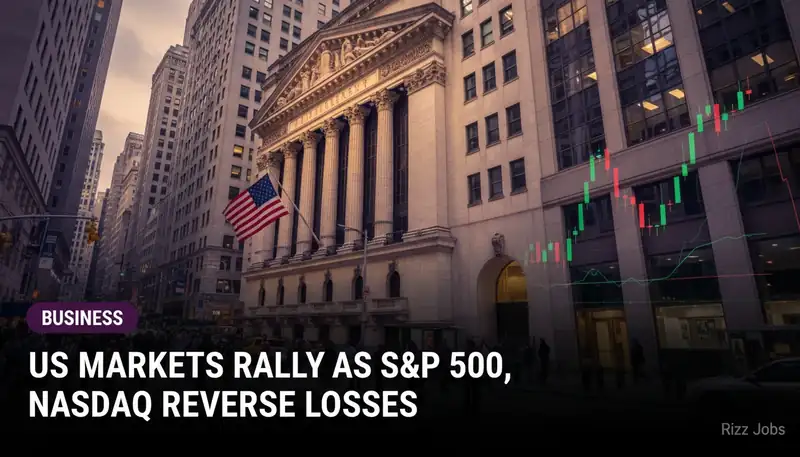
In a dramatic turn of events, the US stock markets saw a significant recovery as the S&P 500 and Nasdaq indices reversed earlier losses. This positive shift comes amidst a backdrop of geopolitical tensions in the Middle East, with investors closely monitoring the situation and its potential impact on global markets. The looming deadline for a ceasefire proposed by former US President Donald Trump has added an additional layer of uncertainty, causing fluctuations in investor sentiment.
The S&P 500 and Nasdaq's recovery is largely attributed to a surge in technology stocks, which have shown resilience despite the broader market volatility. This resilience is crucial for Indian investors, as many Indian tech firms have close ties with their US counterparts, and any positive movement in the US tech sector could have ripple effects on Indian markets.
Moreover, the geopolitical tensions in the Middle East have led to fluctuations in oil prices, which are a critical factor for the Indian economy. As one of the largest importers of oil, India is particularly sensitive to changes in oil prices, which can affect inflation and the fiscal deficit. Investors are advised to keep an eye on these developments, as they could influence the Reserve Bank of India's monetary policy decisions.
While the immediate market reaction has been positive, the situation remains fluid, and investors should remain cautious. Analysts suggest that maintaining a diversified portfolio could help mitigate risks associated with such geopolitical uncertainties. As the deadline for the ceasefire approaches, market participants will be keenly watching for any developments that could impact the global economic landscape.


