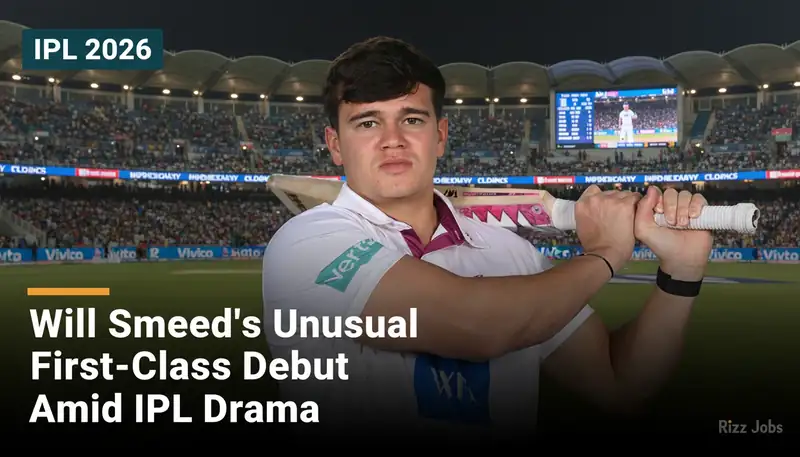
In a surprising turn of events, Will Smeed, who had retired from first-class cricket three years ago, made an unexpected debut as a substitute during a recent IPL match. This unusual occurrence unfolded when Tom Kohler-Cadmore, a key player, suffered a hand injury in the slip cordon, necessitating Smeed's entry as a substitute. This incident marks the third time this season that a substitute has been called upon, highlighting the unpredictable nature of cricket and the importance of having a deep bench in the IPL.
Smeed's debut is noteworthy not only because of his prior retirement from red-ball cricket but also because it underscores the dynamic and often unpredictable nature of the IPL. The league, known for its fast-paced matches and high-stakes drama, often requires teams to adapt quickly to unforeseen circumstances. For investors and stakeholders in the IPL, such incidents emphasize the need for strategic depth and flexibility in team compositions.
Furthermore, this event sheds light on the physical demands placed on players in the IPL, which can lead to unexpected injuries and substitutions. For business readers, it serves as a reminder of the importance of risk management and contingency planning, not just in sports but in any high-stakes industry. The IPL's ability to adapt to such challenges is a testament to its robust management and the depth of talent available.
As the IPL continues to capture the attention of cricket fans worldwide, incidents like Smeed's debut are a reminder of the league's unique challenges and the opportunities they present for strategic thinking and innovation. Investors and business leaders can draw parallels between the IPL's adaptability and the need for similar agility in the business world.