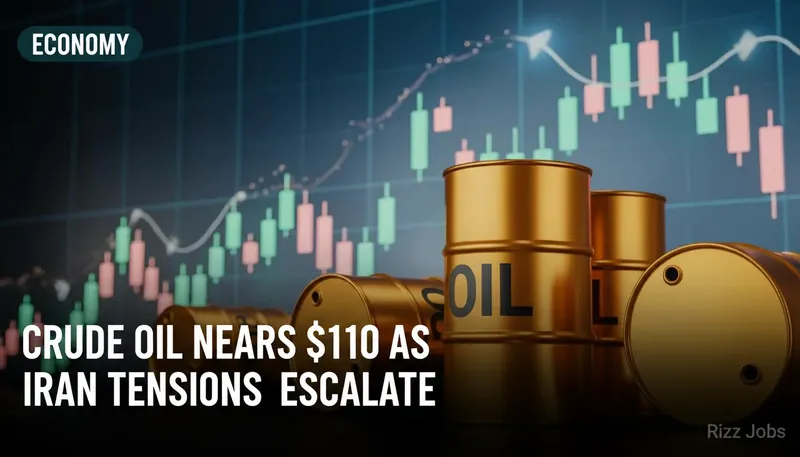
In a significant development impacting global energy markets, crude oil prices have surged to approach $110 per barrel amid escalating tensions between the United States and Iran. The ongoing conflict has led to the partial closure of the critical Strait of Hormuz, a vital chokepoint through which approximately 20% of the world's oil passes. The lack of progress in peace talks has exacerbated concerns over supply disruptions, pushing prices higher. Analysts are now speculating that if the situation persists, Brent crude could potentially skyrocket to $150 per barrel, posing substantial risks to the global economy.
This price surge is particularly concerning for India, the world's third-largest oil importer, which relies heavily on imports to meet its energy needs. Rising oil prices could lead to increased inflationary pressures, affecting everything from transportation costs to the price of goods and services. The Reserve Bank of India (RBI) may face challenges in balancing inflation control with economic growth, potentially influencing monetary policy decisions.
Moreover, Indian businesses, especially those in sectors like aviation and logistics, could see their operational costs rise, impacting profitability. Investors in these sectors should closely monitor the situation, as prolonged high oil prices could lead to increased volatility in related stocks. Additionally, the Indian government might need to reassess its fiscal strategies, including subsidies and tax policies, to mitigate the impact on consumers and businesses.
In conclusion, the ongoing geopolitical tensions and their impact on oil prices underscore the interconnectedness of global markets and the importance of strategic energy planning for India. Stakeholders across the spectrum, from policymakers to investors, must remain vigilant and adaptive to navigate the complexities of this evolving situation.