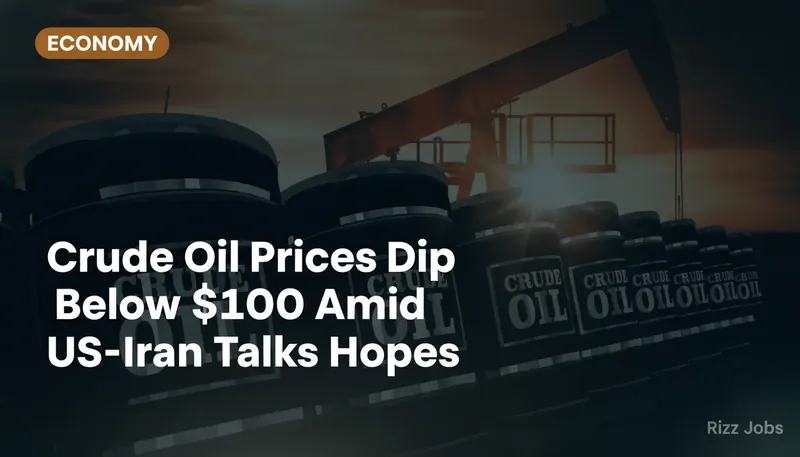
In a significant development for global energy markets, crude oil prices have dipped below the $100 mark, driven by renewed optimism over potential peace talks between the United States and Iran. This comes amidst a backdrop of heightened geopolitical tensions and ongoing supply chain disruptions. The possibility of a diplomatic breakthrough has injected a sense of cautious optimism among market participants, even as the broader environment remains fraught with uncertainty.
The recent drop in oil prices can be attributed to reports indicating a possible thaw in US-Iran relations, which could lead to the lifting of sanctions on Iranian oil exports. Such a move would potentially increase global oil supply, exerting downward pressure on prices. However, analysts caution that the path to a comprehensive agreement is fraught with challenges, and any delay or breakdown in negotiations could lead to renewed volatility.
For Indian investors and businesses, the implications of these developments are multifaceted. A sustained decrease in oil prices could ease inflationary pressures, providing some respite to the Indian economy, which is heavily reliant on oil imports. Lower oil prices could also translate into reduced costs for industries dependent on petroleum products, potentially boosting profitability.
However, the situation remains fluid, with risks of price spikes persisting if geopolitical tensions escalate or if there are further disruptions in energy flows. Indian policymakers and businesses will need to remain vigilant, closely monitoring international developments and adjusting strategies accordingly.
As the global energy landscape continues to evolve, the interplay between geopolitical dynamics and market forces will remain a key determinant of oil price trajectories. Investors are advised to stay informed and consider the broader macroeconomic context when making investment decisions.