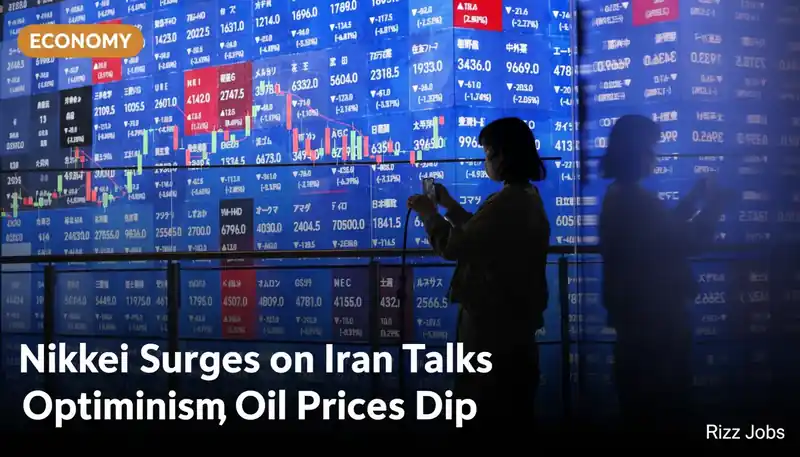
In a significant development for global financial markets, Japan's Nikkei index has reached a six-week high, buoyed by renewed optimism surrounding diplomatic efforts to resolve the ongoing Iran conflict. This surge comes as oil prices experience a notable dip, driven by hopes of a potential ceasefire. The global market sentiment was further uplifted by comments from U.S. Vice President JD Vance, who indicated that progress is being made in the talks.
The easing of oil prices is particularly significant for the global economy, as it could alleviate inflationary pressures that have been a concern for central banks worldwide. For Indian investors, this development is crucial as it may lead to a stabilization of commodity prices, which have been volatile due to geopolitical tensions. A decrease in oil prices could also positively impact India's trade balance, as the country is one of the largest importers of crude oil.
Japanese stocks, often seen as a bellwether for Asian markets, have reacted positively to these developments. The Nikkei's rise is a reflection of investor confidence in the potential resolution of geopolitical conflicts, which in turn could lead to more stable global economic conditions. This optimism is likely to have a ripple effect on other Asian markets, including India, where investors are keenly watching international developments.
For Indian businesses, particularly those in sectors reliant on oil and gas, a sustained decrease in oil prices could result in lower operational costs and improved profit margins. Additionally, the potential for reduced geopolitical tensions may encourage foreign investment, offering further growth opportunities for Indian companies.
As the situation unfolds, market participants will be closely monitoring the progress of the Iran talks and their implications for global trade and investment flows. The current market rally underscores the interconnected nature of global economies and the impact of geopolitical developments on financial markets.