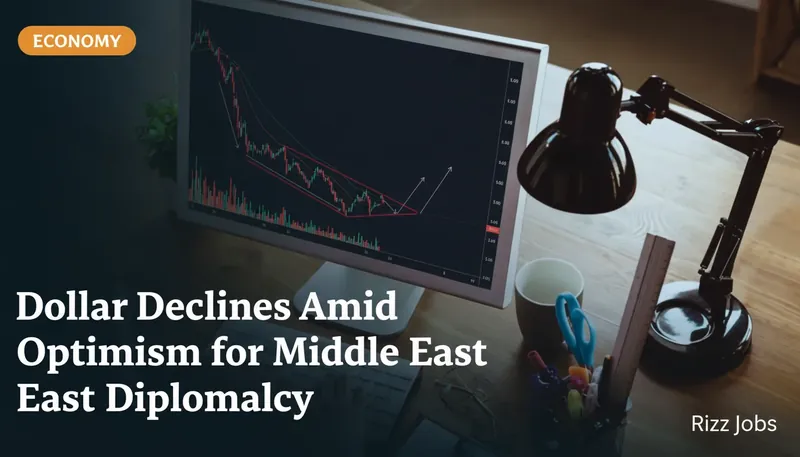
In a notable shift in the global foreign exchange landscape, the US dollar has experienced a decline as investors express optimism over potential diplomatic talks in the Middle East. This development comes as market participants anticipate that successful negotiations could ease geopolitical tensions, leading to a more stable economic environment. The dollar's depreciation is largely attributed to reduced demand for safe-haven assets, as investors shift focus towards riskier assets in anticipation of positive outcomes from the talks.
The forex market, known for its volatility, has seen the dollar index, which measures the greenback against a basket of major currencies, slip from recent highs. Analysts suggest that this movement is reflective of a broader sentiment shift, where traders are recalibrating their positions based on geopolitical developments. The potential for diplomatic resolutions in the Middle East could lead to a realignment of global trade flows, impacting currency valuations worldwide.
For Indian investors and businesses, this trend holds significant implications. A weaker dollar could benefit Indian exporters by making their goods more competitively priced in international markets. Conversely, it may pose challenges for importers as the cost of dollar-denominated goods could rise. Additionally, the rupee's performance against the dollar will be closely watched, as it could influence the Reserve Bank of India's monetary policy decisions.
As the situation unfolds, market participants will be keenly observing the outcomes of the Middle East talks, which could set the tone for currency markets in the coming weeks. Investors are advised to stay informed and consider potential impacts on their portfolios, particularly those with exposure to foreign exchange markets.