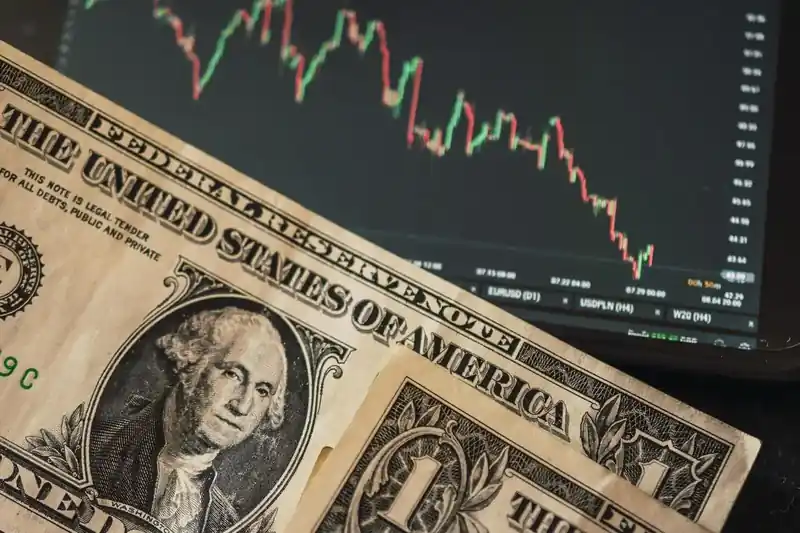
The currency markets have experienced a subdued week as investors navigate the fragile ceasefire in the Middle East and renewed U.S.-Iran tensions, affecting near-term peace prospects.
The euro edged up to $1.1553, recovering from a 10-week low, while the dollar index eased to 99.903 following U.S. military strikes in Iran. The European Central Bank's policy meeting is anticipated to address inflation with potential rate hikes.
Sterling was valued at $1.33905, and the dollar index, which tracks the U.S. currency against six major peers, decreased to 99.903 after the U.S. military announced completed strikes on multiple Iranian targets. President Donald Trump's vow for further attacks if no peace deal is reached has escalated tensions, causing oil prices to rise, with Brent futures increasing over 2% to $95.40 a barrel.
“We still have a bit of news fatigue in the market.”
Nick Twidale, Chief Market Analyst at ATFX Global
Despite the escalation, market reactions were less volatile than previous instances, with the dollar remaining stable in early Asian trading. "We still have a bit of news fatigue in the market," said Nick Twidale, chief market analyst at ATFX Global. "It comes down to the markets craving a bit of certainty again."
The U.S. Consumer Price Index rose 4.2% over the past 12 months, the largest gain since April 2023. However, economists believe the threshold for monetary policy tightening remains high. The core CPI increased by 0.2% in May, down from 0.4% in April, suggesting that energy shock-induced price pressures might be contained.
“We do not expect Ueda's absence to impact on the BOJ's policy decision.”
Carol Kong, Currency Strategist at Commonwealth Bank of Australia
In Japan, the yen stood at 160.52 per dollar, raising concerns about potential intervention from Tokyo. Bank of Japan Governor Kazuo Ueda's hospitalization will not impact the central bank's expected rate hike decision, according to Carol Kong, a currency strategist at Commonwealth Bank of Australia.
Traders have fully priced in a 25-basis-point rate hike in December, a significant shift from earlier expectations of two rate cuts this year before the Iran conflict intensified. The Australian dollar was at $0.7006, while the New Zealand dollar remained steady at $0.5797.
Background
The ongoing geopolitical tensions and economic indicators continue to shape market dynamics. Investors will closely watch the outcomes of the ECB and BOJ meetings, as well as developments in the Middle East, for further market direction.
Investors will closely watch the outcomes of the ECB and BOJ meetings, as well as developments in the Middle East, for further market direction.