Emerging-market assets experienced a pullback following reports that Iran has turned down a ceasefire proposal, dampening hopes for a swift resolution to the ongoing conflict in the Middle East. This development has sent ripples across global markets, with investors reassessing their risk exposure. Emerging markets, often seen as high-risk, high-reward investments, are particularly sensitive to geopolitical tensions. The Middle East conflict has already caused volatility in oil prices, a crucial factor for many emerging economies reliant on energy imports. For Indian investors, this situation underscores the importance of diversification and risk management in their portfolios. The rejection of the ceasefire proposal by Iran not only affects investor sentiment but also has broader implications for global trade and economic stability. As tensions escalate, there is a growing concern about potential disruptions to oil supply chains, which could lead to increased costs for businesses and consumers alike. Indian markets, which have been relatively resilient, may face headwinds if the conflict intensifies, affecting sectors such as energy, transportation, and manufacturing. Analysts suggest that investors keep a close watch on further developments in the region and consider hedging strategies to protect their investments. The situation also highlights the interconnected nature of global markets, where geopolitical events can have far-reaching impacts on financial systems worldwide. As the situation unfolds, stakeholders will be keenly observing any diplomatic efforts that may emerge to de-escalate tensions and stabilize markets.
economy
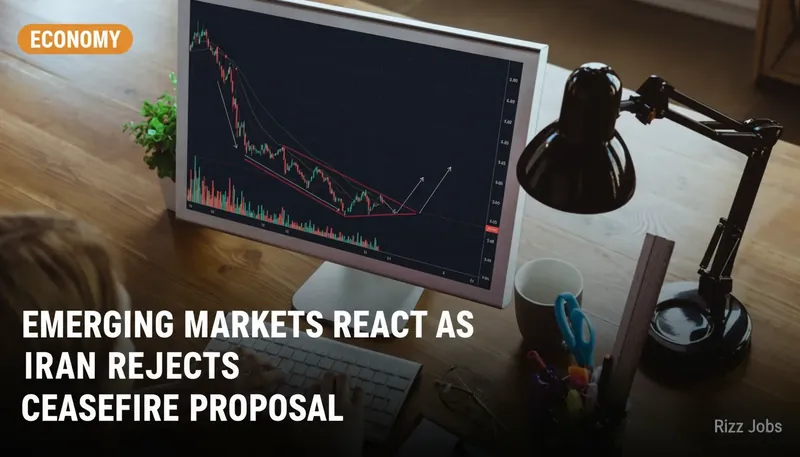
Emerging Markets React as Iran Rejects Ceasefire Proposal
Rizz Jobs News Desk··2 min read
Market Briefing
- Emerging-market assets have faced a setback as Iran's rejection of a ceasefire proposal impacts investor sentiment.
- This development highlights the need for risk management in portfolios.
Share this story
Topics
emerging marketsIran conflictgeopolitical tensionsoil pricesIndian economy
Stay Informed
India's financial news, delivered daily.
Finance, markets, economy and startup updates — straight to your inbox.
Subscribe Free →