In the ever-evolving landscape of global trade, recent developments involving key economic players like the United States and China are setting the stage for what could be a significant shift in international commerce. As President Donald Trump and President Xi Jinping navigate their complex trade relationship, the implications for the global economy, including India, are profound. The recent easing of trade tensions between the two superpowers has been a welcome relief for markets worldwide. However, this apparent thaw is accompanied by rising fuel prices and a more stringent fiscal approach by governments, indicating a broader narrative at play. For Indian businesses, these developments are a double-edged sword. On one hand, improved trade relations between the US and China could stabilize global supply chains, benefiting industries reliant on international trade. On the other hand, rising fuel prices could increase operational costs, squeezing margins for sectors like manufacturing and logistics. Moreover, a tighter fiscal tone globally suggests that governments might be more cautious with spending, potentially impacting economic growth. Indian investors must remain vigilant, as these global dynamics could influence domestic markets. The Reserve Bank of India may need to adjust its monetary policies in response to external pressures, while businesses might have to recalibrate their strategies to navigate the changing landscape. In summary, while the trade thaw between the US and China is a positive development, the accompanying challenges of rising fuel costs and fiscal conservatism require careful consideration by Indian stakeholders.
economy
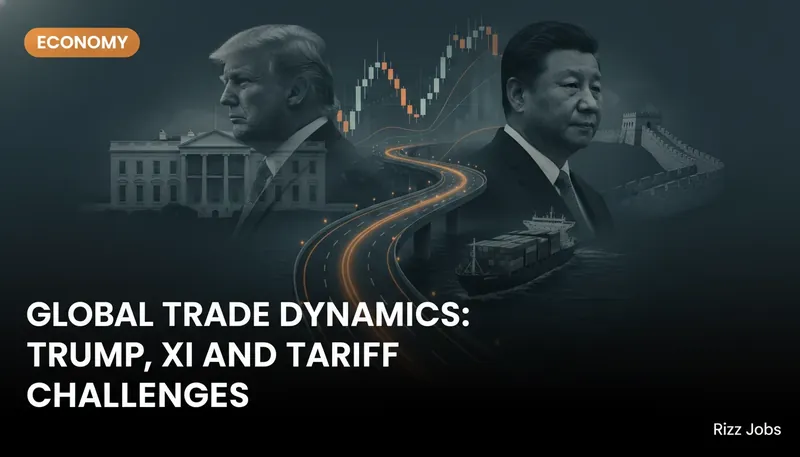
Global Trade Dynamics: Trump, Xi, and Tariff Challenges
Rizz Jobs News Desk··2 min read
Market Briefing
- The easing of US-China trade tensions signals potential benefits for global supply chains, but rising fuel prices and fiscal conservatism pose challenges for Indian businesses.
Share this story
Topics
US-China tradeglobal economyfuel pricesfiscal policyIndian markets
Stay Informed
India's financial news, delivered daily.
Finance, markets, economy and startup updates — straight to your inbox.
Subscribe Free →