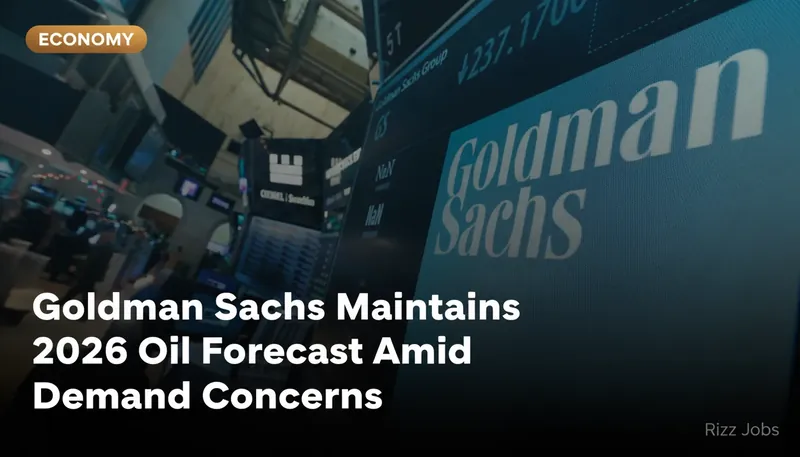
Goldman Sachs has decided to maintain its oil price forecast for 2026, despite a shifting global landscape characterized by weakening demand and easing supply disruptions. This decision comes as the international oil market grapples with a complex set of dynamics that include receding geopolitical tensions and softening consumption trends. For Indian investors, this development is particularly significant given the country's dependency on oil imports and the cascading effects of global oil prices on domestic inflation and economic stability.
The investment bank's outlook suggests a cautious approach to crude prices in the near term, as the anticipated recovery in supply could further exacerbate downside risks. This is a crucial consideration for Indian businesses and policymakers, who must navigate the potential impact on trade balances and fiscal policies. With the global demand for oil showing signs of softening, primarily due to economic slowdowns in major economies, the ripple effects could influence India's economic growth prospects.
Moreover, the easing of supply disruptions, which have been a major concern over the past few years, offers a mixed bag for Indian markets. On one hand, it could lead to more stable oil prices, providing relief to sectors heavily reliant on oil. On the other hand, it could also mean increased competition and volatility in the global market, affecting pricing strategies and profit margins for Indian companies engaged in international trade.
For Indian investors, the key takeaway is the need for a diversified investment strategy that hedges against potential oil price volatility. As the global market stabilizes, albeit cautiously, opportunities may arise in alternative energy sectors, which are gaining traction as viable investment options. In conclusion, while Goldman Sachs' steadfast oil forecast reflects a degree of confidence in market stabilization, Indian stakeholders must remain vigilant and adaptive to the evolving global economic landscape.