Kevin Warsh, the newly appointed Chair of the Federal Reserve, steps into a role fraught with challenges as he inherits a divided central bank. The recent policy meeting saw four dissenting votes, marking the largest split in the Federal Reserve since 1992. This division comes at a time when rising oil prices are adding complexity to the economic landscape, potentially fueling inflationary pressures that could impact global markets, including India. Warsh's leadership style, which encourages open debate, will be tested as he navigates these monetary policy challenges. The surge in oil prices has already begun to ripple through the global economy, affecting everything from consumer prices to corporate earnings. For Indian investors, the implications are significant. Rising oil prices can lead to increased costs for Indian businesses, particularly in sectors heavily reliant on fuel, such as transportation and manufacturing. Additionally, inflationary pressures could influence the Reserve Bank of India's policy decisions, potentially impacting interest rates and the broader economic environment. Warsh's approach to fostering a more open dialogue within the Fed could lead to more dynamic policy responses, but it also raises questions about the central bank's ability to present a united front during turbulent times. As Indian markets remain sensitive to global cues, Warsh's leadership at the Fed will be closely watched by investors and policymakers alike. His ability to manage internal divisions while addressing external economic pressures will be crucial in shaping the Fed's policy trajectory and its impact on the global economy.
economy
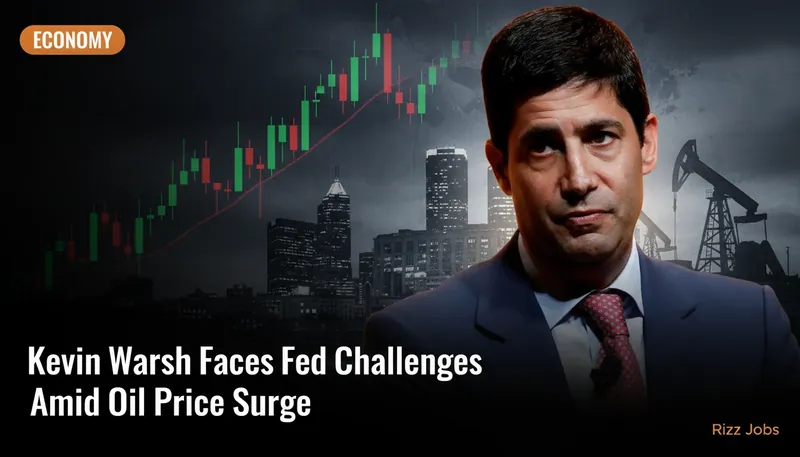
Kevin Warsh Faces Fed Challenges Amid Oil Price Surge
Rizz Jobs News Desk··2 min read
Market Briefing
- Kevin Warsh, the new Fed Chair, faces significant challenges with a divided Federal Reserve and rising oil prices.
- His leadership style encourages open debate, which will be crucial as he navigates complex monetary policy issues.
Share this story
Topics
Federal ReserveKevin Warshoil pricesinflationmonetary policy
Stay Informed
India's financial news, delivered daily.
Finance, markets, economy and startup updates — straight to your inbox.
Subscribe Free →