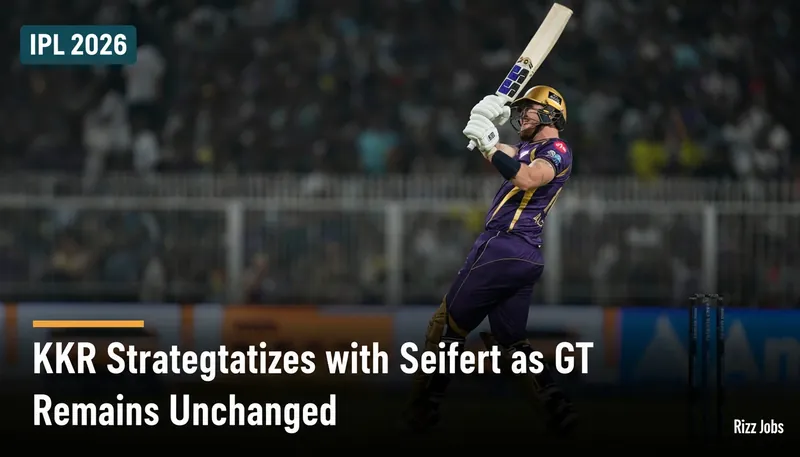
In a strategic move aimed at revitalizing their campaign in the IPL 2026, the Kolkata Knight Riders (KKR) have introduced Tim Seifert into their batting lineup, replacing Finn Allen. This decision comes as KKR seeks to strengthen their top order, which has been under scrutiny following a series of inconsistent performances. The change is seen as a tactical response to their current standing in the league, where they are striving to climb up the points table. Seifert, known for his aggressive batting style, brings a fresh dynamic to the team, potentially providing the explosive starts that KKR has been missing.
On the other hand, the Gujarat Titans (GT) have opted to maintain their lineup, reflecting confidence in their current squad's ability to deliver results. This stability could be a double-edged sword; while it shows trust in the players' abilities, it also leaves little room for adaptation should the need arise during the match.
For investors and business analysts, the IPL represents more than just a cricket tournament. It is a multi-billion-dollar enterprise that impacts various sectors, from media rights and sponsorship deals to merchandise sales and tourism. KKR's decision to alter their lineup could influence betting markets and viewership ratings, as fans and analysts speculate on the outcomes of such changes.
The IPL's economic footprint is significant, contributing to job creation and boosting the economy through various channels. As teams like KKR and GT make strategic decisions, they not only aim for on-field success but also strive to maximize their brand value and market share in this lucrative sporting event.