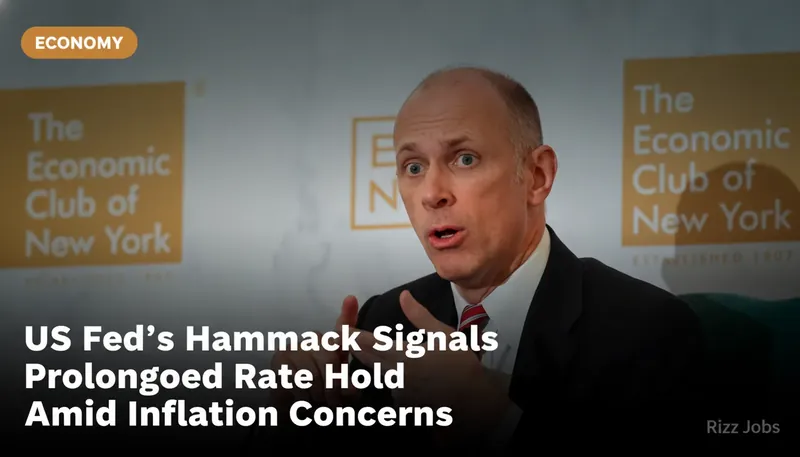
In a significant development for global financial markets, Beth Hammack, President of the Federal Reserve Bank of Cleveland, has indicated that the US Federal Reserve is likely to maintain its current interest rate levels for an extended period. This decision comes amidst persistent inflationary pressures and economic uncertainties that have been exacerbated by global supply chain disruptions and geopolitical tensions. Hammack's remarks underscore the Fed's cautious approach as it navigates the complex dynamics of a post-pandemic economy. The Fed's strategy is aimed at preventing an 'inflationary mindset' from becoming entrenched among consumers and businesses, who have already experienced a decade's worth of inflation within a mere five years.
For Indian investors and businesses, this stance by the Fed could have several implications. Firstly, the stability in US interest rates might lead to a more predictable global financial environment, which could benefit emerging markets like India by reducing capital outflows. Secondly, the Fed's focus on curbing inflation could influence the Reserve Bank of India's own monetary policy decisions, especially as India grapples with its own inflationary challenges.
Furthermore, the Fed's decision to hold rates steady may impact the Indian rupee's exchange rate against the US dollar. A stable US rate environment could lead to a stronger dollar, affecting India's import costs and trade balance. Indian businesses with exposure to US markets should remain vigilant and consider hedging strategies to mitigate potential currency risks.
Overall, Hammack's comments reflect a cautious yet deliberate approach by the Fed as it seeks to balance economic growth with inflation control. Indian investors should closely monitor these developments, as they could have far-reaching effects on investment strategies and economic forecasts.