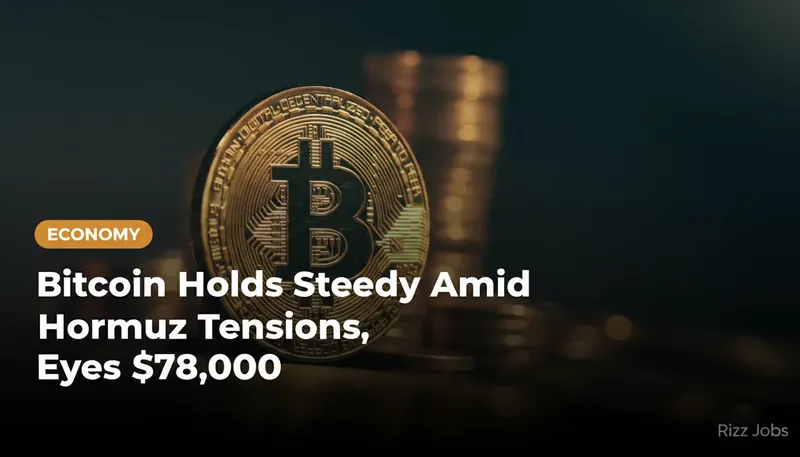
Bitcoin is currently experiencing a phase of consolidation around the $74,500 mark, following a recent surge that saw the cryptocurrency reach a 10-week high of $78,000. This movement comes amid rising geopolitical tensions in the Strait of Hormuz, a critical chokepoint for global oil transport, which has injected a degree of volatility into the markets. The strategic waterway has been a focal point of international concern, and its influence extends beyond traditional commodities, impacting digital assets like Bitcoin as well.
Despite the temporary pullback, the broader outlook for Bitcoin remains positive. Institutional interest continues to grow, evidenced by consistent inflows into Bitcoin ETFs. These investment vehicles have become increasingly popular among institutional investors seeking exposure to the digital currency, providing a steady stream of capital that supports price stability.
Analysts are optimistic about Bitcoin's potential to break through key resistance levels in the near term. Should the cryptocurrency manage to surpass these barriers, it could pave the way for a sustained rally, potentially setting new highs. The market's focus is on the interplay between geopolitical developments and Bitcoin's technical indicators, which will be crucial in determining its trajectory.
For Indian investors, the situation underscores the importance of monitoring global events and their ripple effects on cryptocurrency markets. As digital assets become more intertwined with global financial systems, understanding the nuances of such geopolitical tensions becomes essential for making informed investment decisions. The current scenario also highlights the growing role of institutional players in shaping market dynamics, which could lead to increased stability and maturity in the cryptocurrency space.