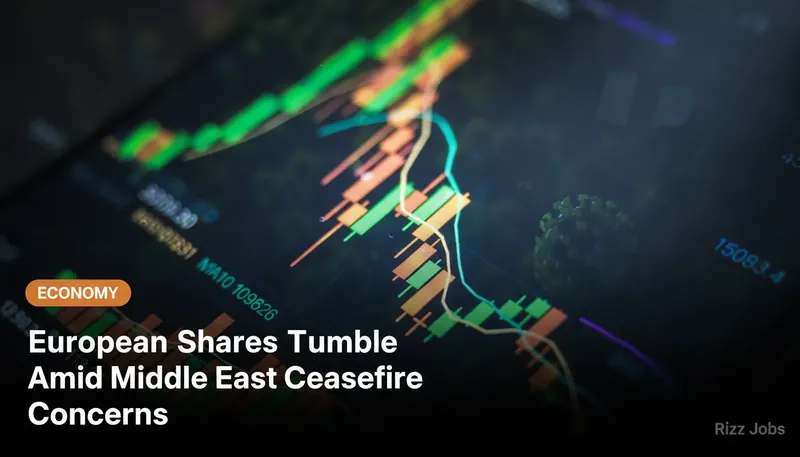
European markets started the week on a downbeat note as investors grappled with geopolitical tensions in the Middle East. The recent announcement by Washington regarding the seizure of an Iranian cargo ship has cast a shadow over the fragile ceasefire between the U.S. and Iran. Tehran's vow to retaliate has further exacerbated fears of potential disruptions in the region, which is pivotal for global oil supply. This development has sent ripples across European bourses, with major indices witnessing a decline.
The geopolitical uncertainty has led to a risk-off sentiment among investors, who are now seeking safer assets amidst fears of escalating tensions. The potential for conflict in the Middle East, a key region for energy resources, could have significant repercussions on the global oil market. Any disruption in oil supply routes could lead to increased volatility in oil prices, impacting energy-dependent industries and broader economic stability.
For Indian investors, these developments are crucial as they could influence global oil prices, a key determinant of inflation and economic growth in India. Rising oil prices can lead to higher import bills, affecting the trade balance and putting pressure on the Indian rupee. Moreover, fluctuations in global markets can have a cascading effect on Indian equities, particularly in sectors sensitive to global trade dynamics.
As the situation unfolds, market participants will be keenly watching diplomatic efforts to stabilize the region. In the meantime, investors might consider diversifying their portfolios to mitigate risks associated with geopolitical uncertainties. The focus will also be on central banks and their monetary policies, which could play a pivotal role in cushioning economies from potential shocks.